Stand-up pouches by material

Our materials offer you the right solution for product protection, design and sustainability. Choose between recyclable mono-material films (PP or PE) and paper-based composites with reduced plastic content – always tailored to barrier requirements, appearance and legal requirements such as the PPWR. All materials are food-safe and can be individually printed.

  • Recyclable PP & PE mono films
  • Recyclable paper for food contact
  • Matt, gloss and soft-touch finishes
Stand-up pouches by material

Highest quality

Material selection

PP mono films
PE mono films
PET/PE films
Paper materials

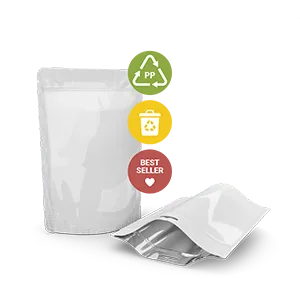
Pearl-white PP mono-material film

Film thickness: 116 & 146 μm

Triplex structure: OPP/OPPmet/CPP T

Pearl-white outside, silver inside

Very high barrier (OTR <0.1 / WVTR <0.1)

Excellent aroma, grease and UV barrier

Optional: white PP film in 98 μm, without barrier

Certified for direct food contact (powders, pastes, liquids)

Designed for recycling – mono-material (PP5)
Pearl-white PP mono-material film

Pearl-white PP mono-material film

Film thickness: 126 μm

Triplex structure: OPP/OPPmet/CPP W

Pearl-white outside, white inside

Very high barrier (OTR <0.1 / WVTR <0.1)

Excellent aroma, grease and UV barrier

Certified for direct food contact (powders, pastes, liquids)

Designed for recycling – mono-material (PP5)
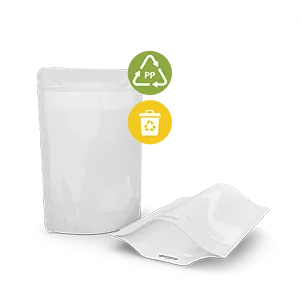
Pearl-white PP mono-material film

Clear PP mono-material film

Film thickness: 108 & 138 μm

Triplex structure: OPP/OPP/CPP T

Clear (gloss finish recommended)

High barrier (OTR <0.1 / WVTR <0.5–1)

Excellent aroma and grease barrier

Optional: clear PP film in 118 μm, without barrier

Certified for direct food contact (powders, pastes, liquids)

Designed for recycling – mono-material (PP5)
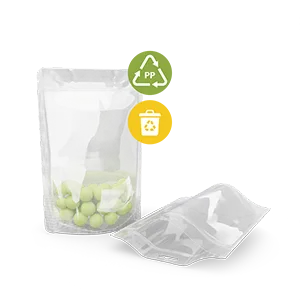
Clear PP mono-material film

Silver metallised PP mono-material film

Film thickness: 106 & 136 μm

Triplex structure: OPP/OPPmet/CPP T

Silver outside, silver inside

Very high barrier (OTR <0.1 / WVTR <0.1)

Excellent aroma, grease and UV barrier

Certified for direct food contact (powders, pastes, liquids)

Designed for recycling – mono-material (PP5)
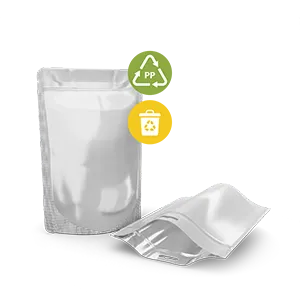
Silver metallised PP mono-material film

White PE mono film

95 & 125 µm film thickness

White outside, white inside

High barrier (OTR <1 / WVTR <1)

Excellent aroma barrier

Certified for foodstuffs (powders, pastes, liquids)

Made for recycling – monomaterial (PE)
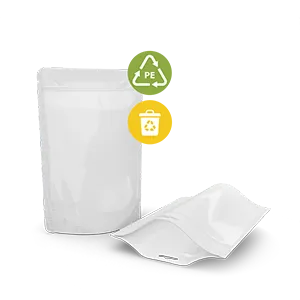
White PE mono film

Transparent PE mono film

95 & 125 µm film thickness

Transparent

High barrier (OTR <1 / WVTR <1)

Excellent aroma barrier

Certified for foodstuffs (powders, pastes, liquids)

Made for recycling – monomaterial (PE)
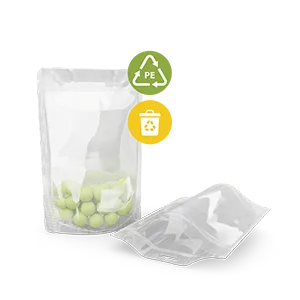
Transparent PE mono film

White PET/PE film

Film thickness: 82 & 112 μm

Duplex structure: PET/PE-EVOH-PE

White outside, white inside

High barrier (OTR ≤1 / WVTR ≤1)

Excellent aroma barrier

Certified for direct food contact (powders, pastes, liquids)
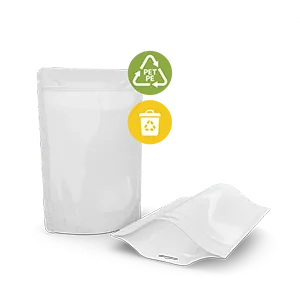
White PET/PE film

Clear PET/PE film

Film thickness: 82 & 112 μm

Duplex structure: PET/PE-EVOH-PE

Clear (gloss finish recommended)

High barrier (OTR ≤1 / WVTR ≤1)

Excellent aroma barrier

Certified for direct food contact (powders, pastes, liquids)
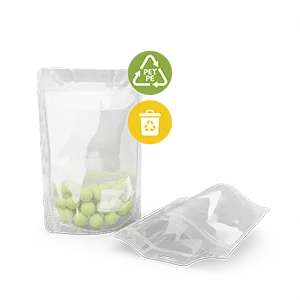
Clear PET/PE film

Silver metallised PET/PE film

Film thickness: 124 μm

Triplex structure: PET/PETmet/PE

Silver outside, silver inside

Very high barrier (OTR ≤0.1 / WVTR ≤0.1)

Excellent aroma barrier

Certified for direct food contact (powders, pastes, liquids)
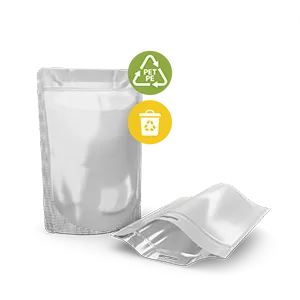
Silver metallised PET/PE film

White PET/ALU/PE film

Film thickness: 111 μm

Triplex structure: PET/ALU/PE

White outside, silver inside

Very high barrier (OTR ≤0.1 / WVTR ≤0.1)

Excellent aroma barrier

Certified for direct food contact (powders, pastes, liquids)
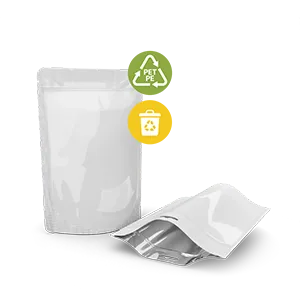
White PET/ALU/PE film

Brown natural paper + PE

Material thickness: 120 μm

Duplex structure: PAP brown / PE-EVOH-PE

Brown outside, brown inside

High barrier (OTR ≤1 / WVTR ≤1)

Excellent aroma barrier

Certified for direct food contact (powders, pastes, liquids)
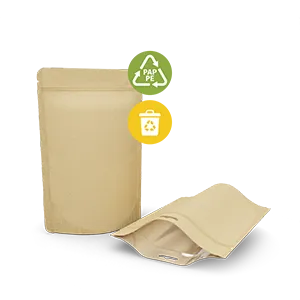
Brown natural paper + PE

White natural paper + PE

Material thickness: 120 μm

Duplex structure: PAP white / PE-EVOH-PE

White outside, white inside

High barrier (OTR ≤1 / WVTR ≤1)

Excellent aroma barrier

Certified for direct food contact (powders, pastes, liquids)
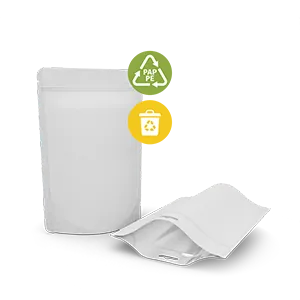
White natural paper + PE

White paper, plastic-free

Paper thickness: 65 μm

White outside, white inside

No barrier

Certified for direct food contact

Designed for recycling (PAP22)
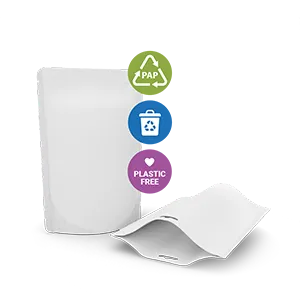
White paper, plastic-free

White paper, plastic-free, with barrier

Paper thickness: 75 μm

White outside, white inside

Medium barrier (OTR ≤5 / WVTR ≤20)

Certified for direct food contact

Designed for recycling (PAP22)

White paper, plastic-free, with barrier

Configure stand-up pouches by material
Design unique stand-up pouches

Zip fastener

Zipper closure

Our stand-up pouches are equipped with a resealable zipper that is easy to open and closes securely – ideal for freshness, convenience and repeated use.

Surfaces

Finishes

Our stand-up pouches are available in matt, gloss, soft-touch or paper-touch finishes, giving your packaging a premium look and a pleasant feel.

Rounded corners

Rounded corners

Stand-up pouches can be manufactured with pointed or rounded corners to ensure better handling and a modern look.

Recycling & PPWR

Recycling & PPWR

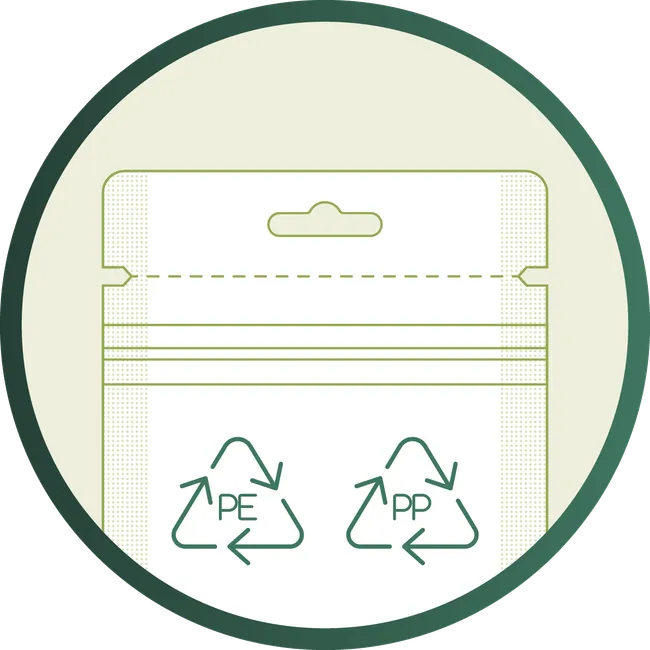
Our stand-up pouches are made from recyclable PP or PE mono-materials and already meet the requirements of the PPWR regulation for sustainable packaging solutions.

Metallic-Effects

Metallic-Effects

With metallised films, we can give your stand-up pouches eye-catching metallic effects on request – ideal for exclusive designs and maximum attention.

Viewing Window

Viewing Window

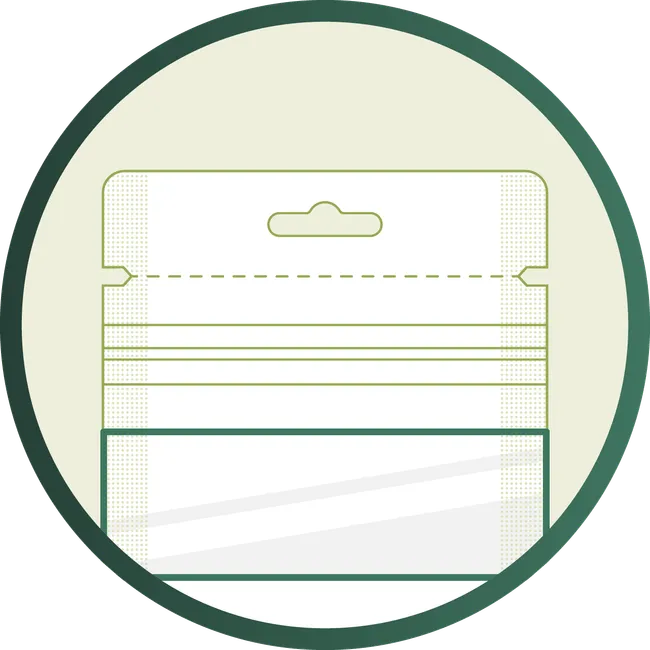
Highly transparent viewing windows with gloss film make the contents of your stand-up pouches clearly visible – without any milky effect and with strong product presentation.

Special Shapes

Special Shapes

Thanks to modern die-cutting technology, we also manufacture stand-up pouches in custom special shapes – for distinctive packaging with strong brand impact.

Cut-Outs

Cut-Outs

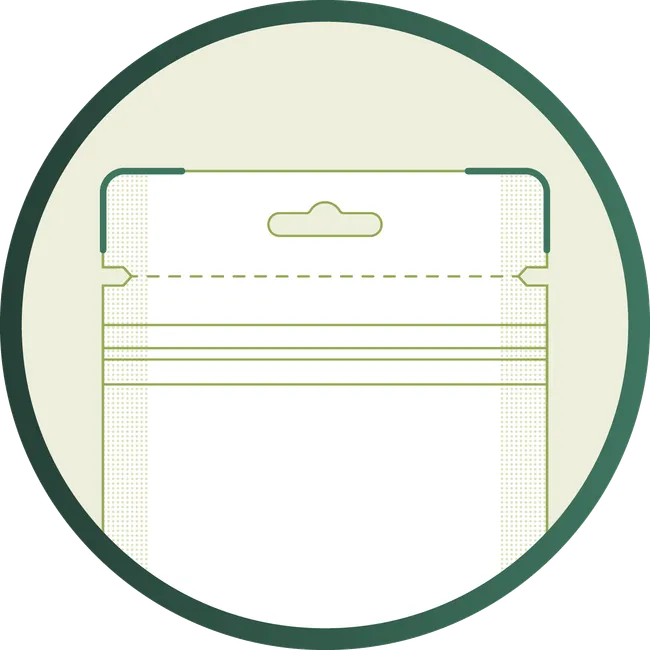
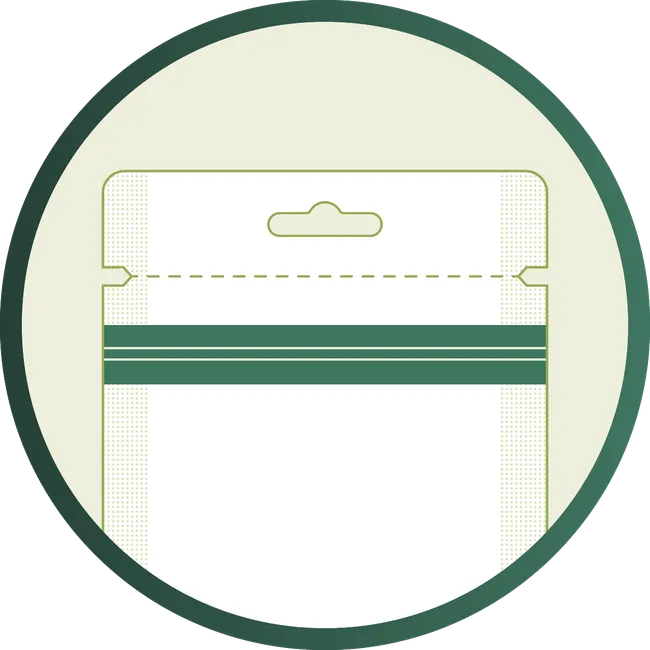
Our stand-up pouches can be equipped with tear tabs, Euro holes or other cut-outs – for optimum functionality and attractive presentation at the POS.

Consultant Lasse Harder

Lasse Harder
CEO & FlexPack-Specialist

Are you looking for stand-up pouches that protect your product and create a wow effect?

Our experienced team of packaging specialists is available to support you by phone or email at any time. Whether you have extensive projects, individual solutions or specific questions about our products, materials, production processes and much more, we advise you personally, competently and reliably. Together, we find the right packaging solution for your requirements. Please do not hesitate to contact us – we look forward to hearing from you.

Tel.: +49 (0) 751 951 440 0

Stand-up pouches by material

Frequently asked questions

Which materials are recyclable and are there recycling certificates?
What is the smallest size available for Flat Pouches?
What pouch materials are offered and what barrier do they provide?
How can I create a custom window for my pouch?
What is the actual fill level for my bag?
What foods can I put in the pouches?
Vielfalt an Standbodenbeutel und Oberflächen
QUALITY & RELIABILITY

Wide material selection – for every industry and application.

Whether food, supplements, pet food or non-food: we produce high-quality stand-up pouches that protect your product optimally and make an impact at the POS. With more than 20 different material structures, we give you the flexibility to choose exactly the material that fits your filling goods, filling process and brand.

From proven PET/PE laminates and modern PE and PP mono-materials to special barrier solutions – our material variety enables us to find the right solution for almost every requirement. We consider not only product protection and shelf life, but also feel, appearance and sustainability.


Qualitätsprüfung Herstellung Standbodenbeutel
>4000 CUSTOMERS TRUST US

We manufacture your stand-up pouches in the heart of Germany.

This is where your packaging is made. In our production facility in Germany, we print, laminate, cut and manufacture every stand-up pouch ourselves. Three generations of experience meet modern technology and a passion for creating packaging that convinces. Because everything happens under one roof, we can react quickly, adapt flexibly and guarantee consistently high quality.

This is valued by more than 4,000 customers across Europe, who trust our reliability, personal service and the experience with which we support every project.

Dextro Energy Logo
Esjot Logo
mymuesli logo
Störtebekker Logo
Hugendubel Logo
Neuroth Logo

INTERESTING FACTS

Guide to stand up pouches

Materials for flexible packaging

AlOx - aluminium oxide

The abbreviation AlOx stands for aluminium oxide and describes an ultra-thin, high-barrier inorganic coating that is usually applied to PET and BOPP films using a vacuum process. AlOx barriers are applied to the carrier film with a thickness in the nanometre range and are transparent.
Read more

Aluminium

Aluminium (ALU) is used in packaging film as a thin functional layer when particularly high levels of protection are required. Aluminium barriers provide the ultimate protection against oxygen, water vapour and light. The most common application is as a middle layer in PET/ALU/PE composite materials; which protects the sensitive aluminium and at the same time enables the best processing properties.
Read more

Barrier films

A barrier film is a barrier layer integrated into the packaging that protects food, cosmetic products or industrial goods from external influences such as oxygen, water vapour, UV radiation or even mineral oils.
Read more

Film thickness

The film thickness, also known as film thickness, is measured in micrometres (µm) and, depending on the application, is a decisive factor for film stability, product protection and printing and finishing options. Films are used in various areas such as logistics, packaging production and construction. Depending on the application, films have special properties such as:
Read more

Monomaterial

In the context of flexible packaging, a monomaterial refers to a material that is primarily made from one type of plastic – typically PE or PP-based. As a common rule of thumb for design for recycling, a structure is considered ‘mono’ if at least 90% of its total weight consists of the target polymer. The remaining portion may consist of printing inks, adhesives or thin functional layers such as barrier films – provided these do not interfere with the recycling process.
Read more

EVOH

The abbreviation EVOH stands for ethylene vinyl alcohol copolymer. In flexible packaging, EVOH is used as a thin, organic barrier layer to protect products primarily from oxygen (and thus oxidation and aroma loss). In packaging films, EVOH is usually transparent and is therefore suitable for clear high-barrier packaging.
Read more

Metallisation

Metallisation refers to aluminium-metallised barriers that are applied to a carrier film (e.g. BOPP or PET) in nanometre-thin layers using vacuum coating (PVD). This process enables very high oxygen, water vapour and light barriers to be achieved with minimal material usage.
Read more

PET - polyester

Polyethylene terephthalate (PET) is a dimensionally stable, highly printable type of plastic that is primarily used as a printing and outer film in flexible packaging. Its excellent thermal stability in particular enables high mechanical loads and ensures dimensionally stable repeats over long print jobs.
Read more

PE - polyethylene

Like PP, polyethylene (PE) belongs to the polyolefin group and is one of the most popular packaging materials due to its properties. Polyethylene is considered tough, stable and easy to weld. It is therefore mainly used as an internal sealing medium for various flexible packaging such as bags, flow packs and sachets. In modern mono-material structures, PE in the form of MDO-PE is also used as a PET substitute for printing films. So-called coex films are often used for flexible packaging such as stand-up pouches – in this process, EVOH barriers, for example, are already incorporated (extruded) into the PE film during film production.
Read more
Manufacture of flexible packaging

AlOx - aluminium oxide

The abbreviation AlOx stands for aluminium oxide and describes an ultra-thin, high-barrier inorganic coating that is usually applied to PET and BOPP films using a vacuum process. AlOx barriers are applied to the carrier film with a thickness in the nanometre range and are transparent.
Read more

Aluminium

Aluminium (ALU) is used in packaging film as a thin functional layer when particularly high levels of protection are required. Aluminium barriers provide the ultimate protection against oxygen, water vapour and light. The most common application is as a middle layer in PET/ALU/PE composite materials; which protects the sensitive aluminium and at the same time enables the best processing properties.
Read more

Barrier films

A barrier film is a barrier layer integrated into the packaging that protects food, cosmetic products or industrial goods from external influences such as oxygen, water vapour, UV radiation or even mineral oils.
Read more

Film thickness

The film thickness, also known as film thickness, is measured in micrometres (µm) and, depending on the application, is a decisive factor for film stability, product protection and printing and finishing options. Films are used in various areas such as logistics, packaging production and construction. Depending on the application, films have special properties such as:
Read more

Monomaterial

In the context of flexible packaging, a monomaterial refers to a material that is primarily made from one type of plastic – typically PE or PP-based. As a common rule of thumb for design for recycling, a structure is considered ‘mono’ if at least 90% of its total weight consists of the target polymer. The remaining portion may consist of printing inks, adhesives or thin functional layers such as barrier films – provided these do not interfere with the recycling process.
Read more

EVOH

The abbreviation EVOH stands for ethylene vinyl alcohol copolymer. In flexible packaging, EVOH is used as a thin, organic barrier layer to protect products primarily from oxygen (and thus oxidation and aroma loss). In packaging films, EVOH is usually transparent and is therefore suitable for clear high-barrier packaging.
Read more

Metallisation

Metallisation refers to aluminium-metallised barriers that are applied to a carrier film (e.g. BOPP or PET) in nanometre-thin layers using vacuum coating (PVD). This process enables very high oxygen, water vapour and light barriers to be achieved with minimal material usage.
Read more

PET - polyester

Polyethylene terephthalate (PET) is a dimensionally stable, highly printable type of plastic that is primarily used as a printing and outer film in flexible packaging. Its excellent thermal stability in particular enables high mechanical loads and ensures dimensionally stable repeats over long print jobs.
Read more

PE - polyethylene

Like PP, polyethylene (PE) belongs to the polyolefin group and is one of the most popular packaging materials due to its properties. Polyethylene is considered tough, stable and easy to weld. It is therefore mainly used as an internal sealing medium for various flexible packaging such as bags, flow packs and sachets. In modern mono-material structures, PE in the form of MDO-PE is also used as a PET substitute for printing films. So-called coex films are often used for flexible packaging such as stand-up pouches – in this process, EVOH barriers, for example, are already incorporated (extruded) into the PE film during film production.
Read more
Go to adviser

AlOx - aluminium oxide

The abbreviation AlOx stands for aluminium oxide and describes an ultra-thin, high-barrier inorganic coating that is usually applied to PET and BOPP films using a vacuum process. AlOx barriers are applied to the carrier film with a thickness in the nanometre range and are transparent.
Read more

Aluminium

Aluminium (ALU) is used in packaging film as a thin functional layer when particularly high levels of protection are required. Aluminium barriers provide the ultimate protection against oxygen, water vapour and light. The most common application is as a middle layer in PET/ALU/PE composite materials; which protects the sensitive aluminium and at the same time enables the best processing properties.
Read more

Barrier films

A barrier film is a barrier layer integrated into the packaging that protects food, cosmetic products or industrial goods from external influences such as oxygen, water vapour, UV radiation or even mineral oils.
Read more

Film thickness

The film thickness, also known as film thickness, is measured in micrometres (µm) and, depending on the application, is a decisive factor for film stability, product protection and printing and finishing options. Films are used in various areas such as logistics, packaging production and construction. Depending on the application, films have special properties such as:
Read more

Monomaterial

In the context of flexible packaging, a monomaterial refers to a material that is primarily made from one type of plastic – typically PE or PP-based. As a common rule of thumb for design for recycling, a structure is considered ‘mono’ if at least 90% of its total weight consists of the target polymer. The remaining portion may consist of printing inks, adhesives or thin functional layers such as barrier films – provided these do not interfere with the recycling process.
Read more

EVOH

The abbreviation EVOH stands for ethylene vinyl alcohol copolymer. In flexible packaging, EVOH is used as a thin, organic barrier layer to protect products primarily from oxygen (and thus oxidation and aroma loss). In packaging films, EVOH is usually transparent and is therefore suitable for clear high-barrier packaging.
Read more

Metallisation

Metallisation refers to aluminium-metallised barriers that are applied to a carrier film (e.g. BOPP or PET) in nanometre-thin layers using vacuum coating (PVD). This process enables very high oxygen, water vapour and light barriers to be achieved with minimal material usage.
Read more

PET - polyester

Polyethylene terephthalate (PET) is a dimensionally stable, highly printable type of plastic that is primarily used as a printing and outer film in flexible packaging. Its excellent thermal stability in particular enables high mechanical loads and ensures dimensionally stable repeats over long print jobs.
Read more

PE - polyethylene

Like PP, polyethylene (PE) belongs to the polyolefin group and is one of the most popular packaging materials due to its properties. Polyethylene is considered tough, stable and easy to weld. It is therefore mainly used as an internal sealing medium for various flexible packaging such as bags, flow packs and sachets. In modern mono-material structures, PE in the form of MDO-PE is also used as a PET substitute for printing films. So-called coex films are often used for flexible packaging such as stand-up pouches – in this process, EVOH barriers, for example, are already incorporated (extruded) into the PE film during film production.
Read more

Stand-up pouches in use

Topics & Industries

Food

Food & Snacks

Ideal for food and snack products where freshness and shelf life are essential.
Cosmetics

Cosmetics & Beauty

Ideal for cosmetic products where protection and brand impact come together.
Pet food

Pet food & PET packaging

Ideal for feed and treats that need to be packed fresh, safely and to a high standard.
Coffee and tea

Coffee & Tea

Ideal for coffee and tea, where aroma and freshness are the main focus.
Supplement

Supplements & Vitamins

Ideal for powders and capsules that need reliable protection against moisture and light.
Household and garden

Household & Garden

Ideal for seeds, fertilisers and granules that need to be packed cleanly and securely.
CBD

Cannabis & CBD

Ideal for sensitive products that need to be presented discreetly and with a premium look.
Contract bottler

Contract bottler

Ideal for filling processes where flexibility and efficiency are required.

Stand-up pouches directly from the manufacturer

Your partner for custom stand-up pouches by material

Stand-up pouches
Made in Germany

Your stand-up pouches are manufactured in Germany – for high quality, modern processes and packaging you can rely on.

Sustainable materials

We use recyclable materials, strong product protection and regional production. This allows our stand-up pouches to combine sustainability, function and traceable supply chains.

Personal contact person

You will always have a direct contact person who advises you individually and supports you from your enquiry through to the delivery of your stand-up pouches.